

So, you are traveling abroad to an exciting international destination. How do you know what vaccines, medications, or health precautions you may need before you go?
Traveling somewhere exotic is exciting—but before you pack your bags, there’s one critical step many people overlook: making sure your vaccines are up to date.
The right vaccinations can protect you from serious diseases that are rare in the U.S. but still common in many parts of the world.
The Centers for Disease Control and Prevention (CDC) provides destination-specific travel health information, including vaccine recommendations, entry requirements, and current health alerts.
CDC Travelers’ Health: Destinations — Requirements and Recommendations
https://wwwnc.cdc.gov/travel
Get Vaccinated Before You Travel
The vaccines recommended or required for international travelers depend on several factors, including your destination, length of stay, planned activities, age, health conditions, and previous immunizations.
Follow these steps to prepare:
Routine Vaccines: Why Are They Important for Travelers?
Many vaccine-preventable diseases are uncommon in the United States because childhood vaccination programs have been highly successful. However, travelers may encounter diseases that are less common at home.
International travel can increase your chances of exposure to illnesses such as measles, influenza, COVID-19, hepatitis, and other vaccine-preventable diseases. Staying current on routine vaccinations protects both you and the communities you visit.
Common Travel Vaccines and Preventive Medications
Depending on your destination and travel plans, you may need additional vaccines or medications beyond your routine immunizations.
Cholera
Cholera vaccination is recommended only for certain travelers at increased risk, such as those visiting areas experiencing active cholera outbreaks or people working in humanitarian settings where access to safe food and water is limited.
Most travelers can reduce their risk by practicing careful food and water safety.
Hepatitis A
Widely recommended for international travelers.
Hepatitis A is spread through contaminated food and water and can occur even in popular tourist destinations. Vaccination is recommended for many travelers, including those visiting countries where hepatitis A is common.
Hepatitis B
Recommended for many international travelers.
Hepatitis B spreads through contact with infected blood or bodily fluids. Travelers may have increased risk through medical procedures abroad, sexual exposure, tattoos or piercings, or occupational exposure.
Japanese Encephalitis
Japanese encephalitis is uncommon among travelers but can cause serious neurological illness.
The disease is spread by mosquitoes and occurs mainly in rural agricultural areas of Asia and the western Pacific, especially during transmission seasons.
Vaccination may be recommended for travelers spending extended periods in higher-risk areas or participating in activities that increase mosquito exposure.
Malaria Prevention
Malaria is a mosquito-borne disease found mainly in tropical and subtropical regions of Africa, Asia, Central and South America, the Caribbean, and parts of Oceania.
There are preventive medications available for travelers visiting malaria-risk areas. Your healthcare provider can recommend the appropriate medication based on your destination.
There is no single malaria vaccine routinely used for international travelers, so prevention depends on:
Meningococcal Disease (Meningitis)
Meningococcal ACWY vaccination may be recommended for travelers visiting the meningitis belt of sub-Saharan Africa, especially during peak transmission seasons.
It is also required for pilgrims traveling to Mecca, Saudi Arabia, for Hajj and Umrah.
Mpox (Formerly Monkeypox)
The mpox (smallpox and monkeypox) vaccine may be recommended for travelers at increased risk of monkeypox exposure, depending on current outbreaks and CDC guidance.
Travelers should check current recommendations before departure.
Rabies
Rabies is a serious disease that is almost always fatal once symptoms appear.
Although rabies is rare in the United States, it remains a concern in parts of Africa, Asia, and Central and South America. In many regions, dogs are a major source of infection, while wildlife such as bats, foxes, jackals, mongooses, and skunks can also transmit rabies.
Rabies vaccination may be recommended for travelers who:
Tetanus, Diphtheria, and Pertussis
Tetanus, diphtheria, and pertussis vaccines are routine immunizations.
Adults should receive a Tdap vaccine if they have not received one previously. After that, Td or Tdap booster shots are recommended every 10 years.
A booster may also be recommended after certain injuries if your vaccination status is not current.
Typhoid
Typhoid vaccination is recommended for many travelers visiting areas where sanitation and food safety may be limited, especially in parts of South Asia.
Typhoid spreads through contaminated food and water. Travelers may choose between:
Your healthcare provider can help determine which option is best for your trip.
Yellow Fever
Yellow fever is a serious mosquito-borne disease found in parts of Africa and South America.
There is no specific medicine that cures yellow fever, making prevention especially important.
The yellow fever vaccine is available only through designated vaccination centers. After vaccination, travelers receive an International Certificate of Vaccination or Prophylaxis (ICVP), often called the “yellow card.”
Some countries require proof of yellow fever vaccination for entry. Without proper documentation, travelers may be denied entry or may be required to follow that country’s health regulations.
Because yellow fever vaccine is a live vaccine, travelers with certain medical conditions, weakened immune systems, or older adults may need an individualized assessment before vaccination.
Pre-Trip Travel Medical Appointment
Your regular healthcare provider may be able to advise you about travel health, but many general practitioners do not specialize in international travel medicine or stock travel-specific vaccines.
A travel medicine clinic or public health clinic can provide specialized advice based on:
Many state and local health departments offer travel vaccinations. You can also find travel health information and clinic locations through the CDC Travelers’ Health website:
Come Home With Souvenirs — Not Diseases!
A little preparation before your trip can help protect your health and allow you to focus on the experiences, memories, and adventures waiting for you.
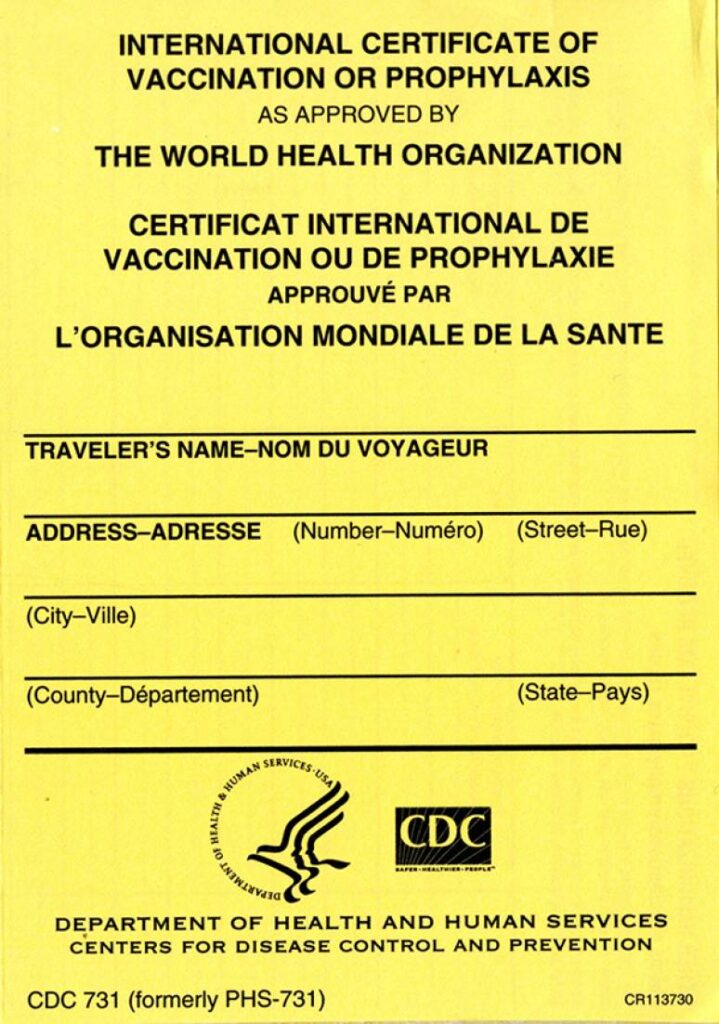
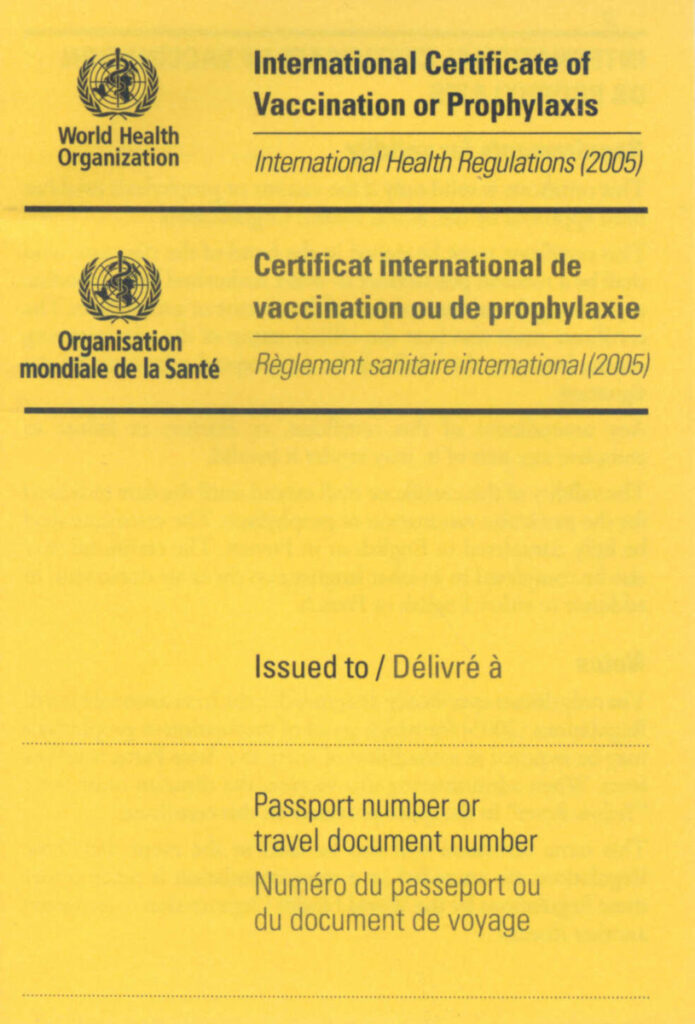
The Certificate is used for recording routine and travel vaccinations and medications to prevent disease (prophylaxis). It provides official proof of Yellow Fever Vaccination for International Travel. Additional pages have space for your health history, regular medications, and allergies.